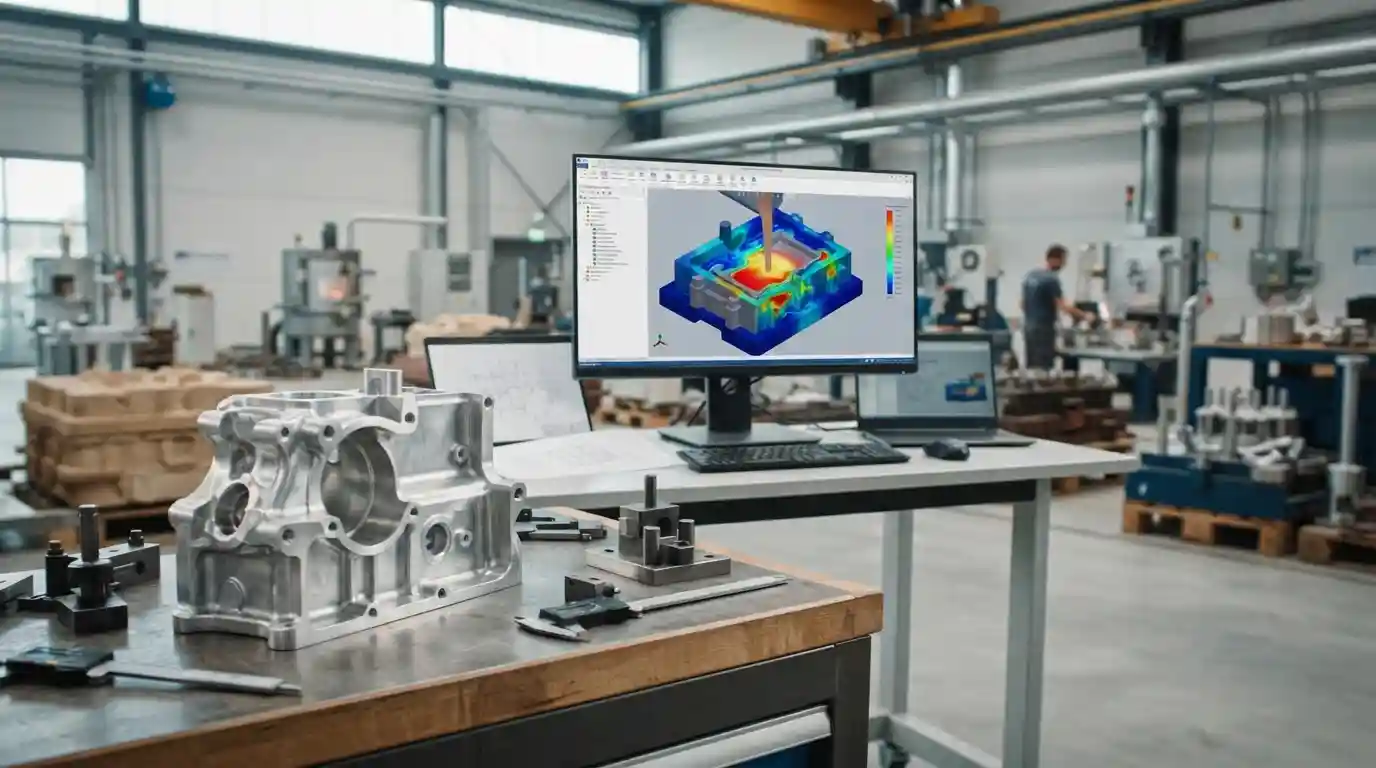
Magma Foundry Technologies Inc addresses these challenges through casting simulation, engineering solutions, and process optimization technologies designed to help foundries make better decisions before committing to physical production. Its approach connects digital simulation with practical manufacturing objectives such as quality, yield, process stability, and cost control.
For businesses exploring advanced digital solutions, the MAGMA approach is an interesting example of how specialized software can transform a highly technical industrial workflow.
What Is Magma Foundry Technologies Inc?
Magma Foundry Technologies Inc. is the North American organization associated with MAGMA’s casting simulation and engineering solutions. The company focuses on technologies for the metal casting and foundry industries, helping engineers analyze and optimize manufacturing processes digitally.
Rather than relying exclusively on physical experiments, casting simulation allows engineers to evaluate different design and process scenarios virtually. This can make it easier to identify potential problems involving filling, solidification, shrinkage, porosity, thermal behavior, and other quality-related factors.
The company is headquartered in Schaumburg, Illinois, and operates within a broader international MAGMA organization serving foundry and die-casting industries.
Why Advanced Manufacturing Needs Simulation
Manufacturing processes can involve hundreds or thousands of interacting variables. Changing one element of a casting design can influence several other parts of the production process.
For example, a modification to a gating system may affect metal flow, filling behavior, turbulence, cooling, and ultimately casting quality. Similarly, changes to risers or thermal conditions can influence solidification and shrinkage.
Physical testing remains valuable, but testing every possible combination on the production floor can be expensive. Simulation provides a way to investigate these possibilities virtually before production resources are committed.
This philosophy is closely connected to broader technology-driven business operations, where data and digital tools are increasingly used to improve decision-making and operational consistency.
How MAGMASOFT Supports Foundry Engineering
One of the central technologies associated with Magma Foundry Technologies Inc. is MAGMASOFT. The software is designed to simulate casting processes and help engineers evaluate potential manufacturing solutions.
Instead of simply showing what might happen during casting, the platform can be used to compare alternative designs and process conditions. Engineers can establish objectives and evaluate multiple scenarios to identify more robust solutions.
This makes simulation particularly useful during the early stages of product and tooling development, when changes are generally easier and less expensive to implement.
Virtual Design Evaluation
Virtual analysis can help engineers investigate different combinations of component geometry, mold layouts, gating systems, risers, process parameters, and thermal conditions.
The ability to explore these variables before production can reduce dependence on repeated physical prototypes and manual adjustments.
Process Optimization
Manufacturers can use simulation to investigate potential improvements in areas such as filling behavior, solidification, yield, cooling, and defect prevention.
Optimization becomes especially valuable when a production process contains many variables that would be difficult to evaluate individually.
Data-Driven Engineering
Modern foundries increasingly need engineering workflows that combine specialist knowledge with digital analysis. This shift resembles developments in other industrial sectors, including advanced manufacturing technology and data-driven production planning.
Key Manufacturing Challenges MAGMA Can Address
Metal casting involves several recurring technical challenges. A simulation-based approach can help engineers investigate these issues before they result in costly production problems.
1. Shrinkage and Porosity
Shrinkage-related defects can significantly affect casting quality. Simulation can help engineers identify areas where solidification behavior may create potential shrinkage or porosity concerns.
By examining alternative feeding and risering strategies virtually, engineers can work toward improved casting integrity while considering material usage and production efficiency.
2. Filling Problems
How molten metal enters and fills a mold can influence turbulence, air entrapment, oxide formation, and other quality factors.
Virtual analysis allows different gating concepts and process conditions to be compared before physical tooling changes are made.
3. Thermal Control
Temperature plays an important role throughout the casting process. Cooling behavior can influence solidification, microstructure, defects, cycle time, and tooling performance.
Simulation can provide engineers with a clearer picture of thermal behavior and help them evaluate possible process improvements.
4. Tooling and Design Decisions
Tooling decisions made early in a manufacturing project can have long-term effects on production cost and quality. Digital analysis gives engineering teams an opportunity to evaluate those decisions before tooling is finalized.
This principle is also relevant to companies working with manufacturing technology solutions across different stages of product development.
Autonomous Engineering and Manufacturing Optimization
A major concept associated with MAGMA is Autonomous Engineering. Instead of requiring engineers to manually examine every possible combination of variables, the methodology uses computational techniques to evaluate a defined design and process space.
The engineer establishes the relevant variables and objectives, while the software evaluates potential combinations and helps identify promising solutions.
This can be especially valuable when the number of possible scenarios becomes too large for practical manual testing.
For modern manufacturers, the concept reflects a wider movement toward intelligent production systems, similar to the technological transformation discussed in advanced digital business environments, where software increasingly supports complex decision-making.
Core and Mold Manufacturing Applications
Foundry production does not stop at metal filling and solidification. Core manufacturing is another area where process consistency can have a direct impact on final casting quality.
Simulation can be applied to aspects of core production such as shooting, gassing, curing, venting, core-box design, and process parameters.
Evaluating these variables virtually can help manufacturers identify more repeatable operating conditions and reduce unnecessary production trials.
For businesses interested in broader specialized technology applications, this illustrates how industry-specific software can solve problems that general-purpose tools cannot easily address.
Benefits for Modern Foundries
Adopting a simulation-driven manufacturing strategy can provide several potential benefits.
- Reduced physical trial and error: More design alternatives can be evaluated digitally before production.
- Improved casting quality: Potential defect mechanisms can be investigated earlier.
- Better material utilization: Engineers can consider yield when evaluating casting designs.
- More consistent processes: Simulation can support the development of robust operating conditions.
- Lower development risk: Potential problems can be identified before expensive tooling and production commitments.
- Faster engineering decisions: Multiple scenarios can be assessed within a structured digital workflow.
These benefits align with the larger manufacturing trend toward digital transformation and intelligent process management.
MAGMA and the Future of Digital Foundries
The future of manufacturing is likely to involve increasingly close integration between physical production and digital engineering. Simulation, optimization, automation, and data analysis can work together to create more predictable manufacturing environments.
For foundries, this means that digital tools are becoming more than optional engineering aids. They can become part of the decision-making process used to design components, develop tooling, establish process parameters, and investigate production problems.
This broader transformation can also be seen in other technology-focused industries covered through technology and digital innovation and digital solution development.
How Manufacturers Can Get More Value From Simulation
Simply purchasing simulation software does not automatically produce better manufacturing results. The greatest value comes from integrating simulation into the engineering workflow.
Start Early
Simulation is often most valuable when used during component and tooling development. Finding a design issue before tooling is manufactured can prevent expensive downstream modifications.
Define Clear Objectives
Engineering teams should establish what they want to improve. Objectives might include defect reduction, improved yield, shorter cycle times, better thermal behavior, or more consistent production.
Combine Software With Engineering Expertise
Simulation should complement engineering knowledge rather than replace it. Engineers still need to understand materials, equipment, tooling, process limitations, and customer requirements.
Use Results to Improve Production
The real value of digital simulation comes when findings are translated into practical manufacturing decisions. Simulation results should inform tooling design, process parameters, production planning, and quality improvement.
The Role of Specialized Technology Companies in Manufacturing
Magma Foundry Technologies Inc. represents a specialized category of technology company focused on solving complex industrial problems through engineering software.
Unlike generic business applications, specialized manufacturing software must understand the physical behavior of materials and processes. That requires domain-specific models, engineering expertise, and practical knowledge of production environments.
This specialization is part of a broader technology ecosystem that includes advanced manufacturing solutions, industrial software, automation, analytics, and engineering services.
Companies evaluating digital transformation can also learn from specialized technology businesses such as technical technology sectors and digital operational platforms.
Why Digital Simulation Matters for Competitive Manufacturing
Manufacturers compete on more than production volume. Quality, development speed, resource efficiency, consistency, and the ability to respond to engineering challenges can all influence competitiveness.
A digital simulation strategy can help reduce uncertainty by allowing engineers to explore manufacturing behavior before making physical changes.
For complex casting operations, that ability can be particularly valuable because production experiments can require substantial material, tooling, labor, machine time, and engineering resources.
The same underlying business principle appears across other sectors: better information before a decision can reduce the cost of making that decision.
Frequently Asked Questions
What does Magma Foundry Technologies Inc. do?
Magma Foundry Technologies Inc. provides casting simulation software and engineering solutions designed to help foundries and manufacturers analyze, optimize, and improve metal casting processes.
What is MAGMASOFT?
MAGMASOFT is casting process simulation and optimization software used to evaluate manufacturing conditions and casting designs virtually.
Why is casting simulation important?
Casting simulation allows engineers to investigate potential manufacturing problems and compare process alternatives before relying entirely on physical production trials.
Can simulation help reduce casting defects?
Simulation can help engineers investigate defect mechanisms such as filling problems, shrinkage, porosity, and thermal issues. The resulting analysis can support better design and process decisions.
Is MAGMA only focused on one type of casting?
MAGMA’s technology portfolio covers multiple areas of metal casting, including cast iron, steel, die casting, non-ferrous casting, core and mold processes, casting design, continuous casting, and heat treatment.
Conclusion
Magma Foundry Technologies Inc. demonstrates how advanced software and engineering methodologies can reshape traditional manufacturing workflows. By moving more analysis into the digital environment, foundries can investigate design alternatives, evaluate process conditions, and identify potential problems before they become expensive physical production issues.
Its focus on casting simulation, optimization, and Autonomous Engineering reflects a broader shift toward data-driven manufacturing. As manufacturers continue looking for ways to improve quality, efficiency, consistency, and development speed, specialized digital engineering tools are likely to become increasingly important.
For organizations exploring the future of industrial technology, MAGMA provides a useful example of how simulation and engineering expertise can work together to make advanced manufacturing more predictable and efficient.