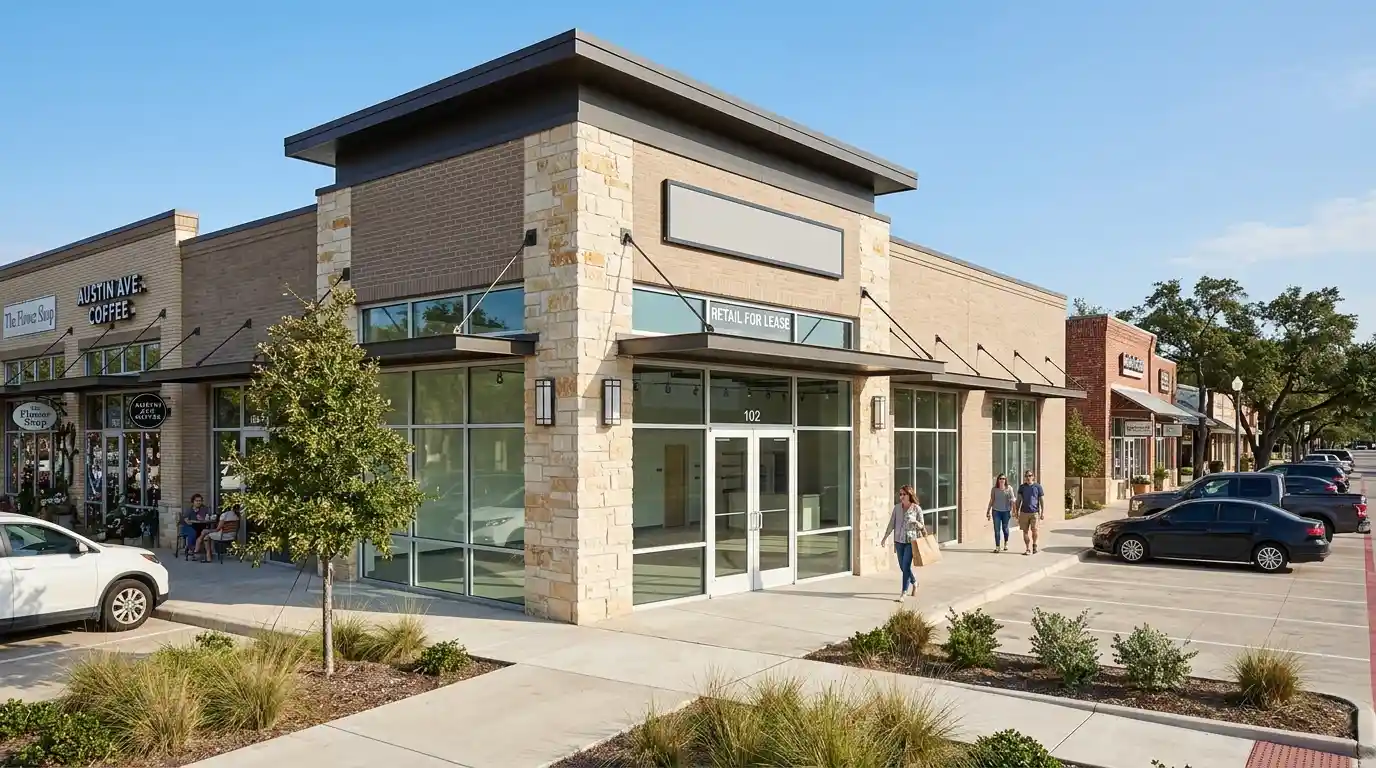
Georgetown, located north of Austin in Williamson County, offers opportunities for businesses serving established neighbourhoods, commuters, students, families, and growing residential communities. However, the right location depends on the type of business, its target customers, and its financial capacity. This guide explains how to assess retail properties, compare leasing options, and make a more informed decision.
Understanding the Retail Property Market in Georgetown, Texas
Georgetown’s retail landscape includes historic downtown storefronts, neighbourhood shopping centres, suburban retail developments, and properties along major roads. Each setting offers a different balance of visibility, customer access, rental costs, and competition.
Downtown locations may suit independent boutiques, speciality retailers, gift shops, and businesses that benefit from a distinctive shopping environment. Shopping centres can provide shared parking and nearby complementary businesses, while roadside properties may appeal to operators who depend on convenient vehicle access and prominent signage.
Before choosing a property, research the surrounding residential population, nearby employers, competing businesses, and customer travel patterns. For broader business-planning ideas, explore this guide to business success and strategic planning.
Types of Retail Space Available for Lease
Street-Level Storefronts
Street-level storefronts are suitable for businesses that benefit from window displays, walk-in customers, and direct street access. They can work well for clothing shops, speciality retailers, salons, and small service businesses. Evaluate pedestrian activity, storefront visibility, loading arrangements, and nearby parking before signing a lease.
Shopping Centre and Strip Mall Units
Shopping centres bring several businesses together in one location. Shared parking and complementary tenants can make shopping more convenient, although the benefits depend on the centre’s occupancy, customer traffic, access points, and tenant mix. Ask how common-area maintenance costs are calculated and whether any restrictions apply to your business.
Standalone Retail Buildings
A standalone property may offer greater control over branding, signage, opening hours, and the customer experience. However, the tenant may be responsible for a wider range of maintenance, utilities, landscaping, and exterior costs. Compare the total occupancy expense with the additional independence the property provides.
Retail Space in Mixed-Use Developments
Mixed-use developments combine retail with residential, office, or other commercial uses. They may provide access to residents and employees throughout the week, but the actual customer base depends on occupancy, access, visibility, and the businesses already operating nearby.
How to Choose the Right Georgetown Retail Location
1. Match the Location to Your Customers
Start by defining who is most likely to buy from your business. A convenience retailer may prioritise nearby households and easy parking, while a destination boutique may depend more on branding, product selection, and planned visits.
Review nearby housing, employment centres, competing stores, public access, and traffic patterns at different times of day. Do not assume that a busy road automatically produces profitable foot traffic. Customers must be able to see, enter, and conveniently visit the property.
2. Compare Accessibility and Visibility
Inspect entrances, turning movements, parking availability, pedestrian routes, delivery access, and signage restrictions. A property with excellent road exposure can still be inconvenient if customers cannot easily turn into the site or find a parking space.
3. Evaluate the Neighbouring Businesses
Nearby businesses can complement your offering or create direct competition. A coffee shop may benefit from offices and other food businesses, whereas a specialist retailer may prefer a location with fewer direct competitors. Walk around the area and observe which businesses attract customers and when activity is strongest.
4. Assess the Property’s Condition
Check the electrical system, plumbing, HVAC equipment, flooring, roof condition, accessibility, fire-safety provisions, and any improvements required for your business. Confirm who pays for repairs and whether the landlord will complete agreed work before possession.
For businesses planning an attractive customer environment, practical ideas from space-efficient interior design and minimalist design principles can inspire thoughtful use of limited floor space.
Understanding Retail Lease Costs
The advertised rental rate is only one part of the cost of leasing commercial property. Depending on the agreement, a tenant may also pay property taxes, building insurance, common-area maintenance, utilities, repairs, and other operating expenses.
Retail listings may quote rent per square foot per year. To estimate the monthly base rent, multiply the annual rate by the rentable square footage and divide the result by 12. For example, a hypothetical 1,500-square-foot unit at $24 per square foot annually would have a base rent of $3,000 per month before additional charges.
Use this calculation to compare properties consistently, but confirm how rentable area is measured and which expenses are excluded from the quoted rate.
Understand Common Lease Structures
- Gross lease: The rent may include some property operating expenses, depending on the contract.
- Modified gross lease: The landlord and tenant divide expenses according to the specific agreement.
- Triple-net (NNN) lease: The tenant generally pays base rent plus specified property taxes, insurance, and maintenance expenses.
Ask for a written breakdown of all recurring charges, annual increases, security deposits, renewal options, repair obligations, and any personal guarantees. Have a qualified commercial lease professional review unclear or significant contractual terms before committing.
Budgeting Beyond the Monthly Rent
Opening a retail shop involves initial expenses that can affect cash flow long before the business reaches a stable level of sales. Create a budget that includes the security deposit, initial rent, interior improvements, shelving, equipment, signage, insurance, utilities, inventory, staffing, and launch marketing.
Maintain a reserve for unexpected repairs, slower-than-expected sales, and seasonal fluctuations. A business that uses nearly all its available capital on rent and renovation may struggle to purchase stock or attract customers after opening.
Financial planning is also important for long-term business stability. Retail employees and owners can benefit from understanding financial responsibilities, while resources such as the role of a finance coordinator can help explain how financial oversight supports business decisions.
Permitted Uses, Zoning, and Lease Restrictions
Never assume that a property advertised as retail space automatically permits every retail or service activity. Confirm the property’s zoning, approved use, occupancy requirements, signage rules, accessibility requirements, and any licences or permits relevant to your business.
Restaurants, food retailers, salons, medical-related businesses, and other specialist operators may face additional requirements. Verify these requirements with the relevant local authorities and qualified professionals before spending money on renovations.
Read the lease carefully for exclusivity provisions, operating-hour requirements, restrictions on alterations, assignment and subletting conditions, renewal procedures, and termination clauses. If your business requires specialist equipment or substantial construction, make sure the proposed use and improvements are expressly permitted.
Preparing Your Retail Business for Opening
Once you have selected a suitable property, develop an opening plan covering fit-out work, supplier arrangements, staffing, inventory, signage, payment systems, and customer communications. Set realistic deadlines and obtain the required approvals before scheduling your opening date.
Build a local marketing plan before the doors open. A useful website, accurate business information, clear product pages, and consistent customer communication can help people discover your shop and understand what it offers.
Businesses selling online as well as in person can learn from digital marketing strategies for growing ecommerce businesses, marketing planning for high-growth firms, and digital marketing ROI for small businesses.
Track enquiries, customer visits, repeat purchases, average transaction value, and marketing costs after opening. These measures can reveal whether the location and promotional strategy are supporting your business goals.
Common Mistakes to Avoid When Leasing Retail Space
- Choosing based on rent alone: Low base rent may be offset by repairs, additional charges, or weak customer access.
- Ignoring the lease details: Unclear renewal, maintenance, or termination terms can create costly problems.
- Overestimating demand: Evaluate actual customer patterns instead of relying only on general growth claims.
- Underestimating fit-out costs: Obtain contractor estimates and confirm landlord responsibilities before signing.
- Skipping permitted-use checks: Verify that the property can legally and practically accommodate your intended business.
- Failing to plan marketing: Even a suitable location needs a clear plan for reaching potential customers.
Business owners should also assess operational resilience. For example, business improvement strategies and business service positioning offer additional perspectives on differentiating a company and planning for sustainable growth.
Retail Space Leasing Checklist
Before signing a retail lease in Georgetown, use this checklist to compare shortlisted properties:
- Confirm the size, layout, permitted use, and condition of the premises.
- Estimate total monthly occupancy costs, not just base rent.
- Inspect parking, visibility, access, signage, and delivery arrangements.
- Research local customers, nearby competitors, and complementary businesses.
- Obtain estimates for renovations, equipment, fixtures, and opening inventory.
- Review lease duration, rent increases, deposits, maintenance, and renewal options.
- Confirm necessary approvals, permits, insurance, and accessibility requirements.
- Prepare a cash-flow forecast and a realistic customer-acquisition plan.
Final Thoughts
Finding retail space for lease in Georgetown, TX, is a strategic business decision that should balance location, affordability, customer access, property condition, and lease flexibility. The most suitable property is not necessarily the largest or most prominent one; it is the space that fits your operating model and gives your business a realistic opportunity to grow.
Compare multiple properties, calculate total occupancy costs, investigate permitted uses, and review the lease before making a commitment. With careful preparation and a clear opening strategy, business owners can make a more confident decision about establishing a retail presence in Georgetown.