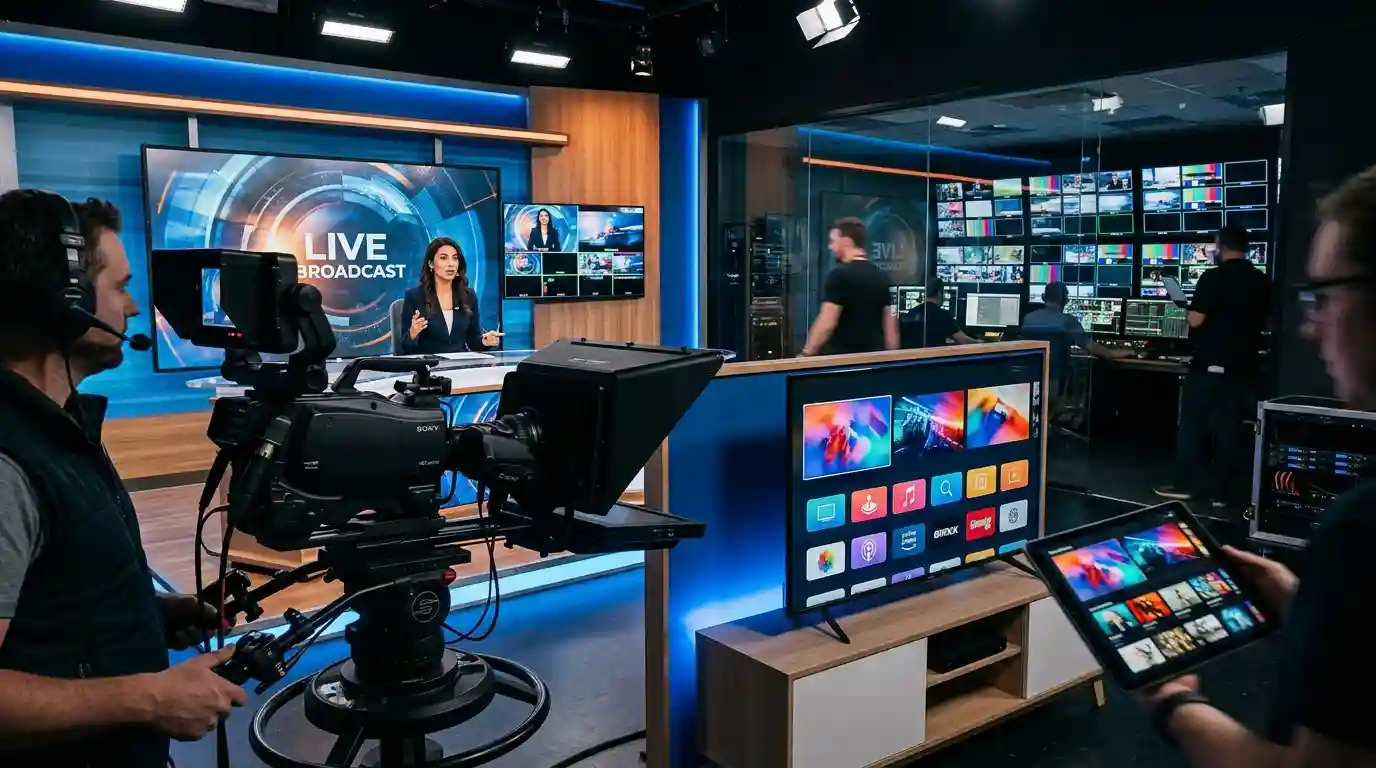
This transformation has created new opportunities for broadcasters, production companies, independent creators, advertisers, and technology businesses. It has also introduced challenges involving audience attention, content discovery, production costs, advertising revenue, and competition. Understanding the modern broadcast landscape means looking beyond television alone to explore the connected ecosystem that delivers entertainment and information today.
Understanding the Modern Broadcasting Landscape
Broadcasting traditionally involved distributing audio or video programmes to a large audience through radio frequencies, terrestrial television, cable networks, or satellite systems. Viewers generally followed fixed schedules, while broadcasters controlled programming decisions and distribution times.
Digital technology has expanded this model. Many media organisations now distribute programmes through websites, mobile applications, connected televisions, social platforms, and on-demand services. A television programme may premiere on a broadcast channel, become available through a streaming service, and later reach new audiences through short clips and social media discussions.
This multi-platform approach allows media companies to extend the life of their content and reach audiences who may never watch traditional television. It also requires them to understand how different distribution channels serve different viewing habits.
From Traditional Television to Digital Streaming
Traditional television remains important for live events, scheduled news, sports, and shared viewing experiences. Its established production infrastructure and broad distribution capabilities continue to make it relevant. However, audiences increasingly expect the flexibility to choose their own viewing times and devices.
Streaming services respond to this demand by making films, series, documentaries, and other programmes available over internet connections. Depending on the service, viewers may access content through subscriptions, advertising-supported plans, rentals, or purchases.
On-demand access changes the relationship between broadcasters and viewers. Instead of organising every viewing experience around a fixed schedule, media companies must make content easy to discover, available across compatible devices, and valuable enough to encourage repeat visits.
For an overview of how entertainment experiences extend beyond conventional television, explore this guide to the entertainment and studio experience. Production environments, live experiences, and digital distribution can all contribute to how audiences discover and enjoy media.
The Growing Influence of Social Media and Online Video
Social media has become an important distribution channel for entertainment, news clips, interviews, commentary, behind-the-scenes footage, and creator-led programming. Short-form video can introduce audiences to a programme or personality before they decide to watch longer content.
These platforms also encourage participation. Viewers can comment, share clips, create reactions, follow creators, and join conversations around popular programmes. This interaction can help content travel beyond its original audience, although reach and engagement vary by platform, subject, and audience interest.
For broadcasters, social distribution works best when it complements rather than simply duplicates the main viewing experience. A short highlight may attract attention, while a full episode, live programme, or dedicated website provides deeper engagement.
Businesses exploring the relationship between digital channels and audience development can also consider digital marketing strategies for media firms. Clear positioning, useful content, audience research, and consistent communication help media organisations build recognition across competing platforms.
How Technology Is Reshaping Content Production
Modern broadcasting relies on a combination of cameras, editing systems, audio equipment, production software, cloud services, content management platforms, and distribution technology. These tools help production teams create, organise, adapt, and deliver material for different screens and formats.
Artificial intelligence and automation are also influencing selected parts of the production process. Depending on the tools and workflow, teams may use them to generate transcripts, organise media libraries, create captions, assist with editing, or analyse audience responses. Human oversight remains important for accuracy, editorial judgement, rights management, and the responsible handling of sensitive material.
Technology can reduce repetitive work, but it does not automatically produce compelling entertainment. Strong storytelling, appropriate research, clear sound, thoughtful editing, and a genuine understanding of the intended audience remain central to quality programming.
Organisations interested in wider technology-led change can explore digital solutions for modern businesses and the role of technology in business operations. These areas illustrate how digital systems can support workflows beyond media production alone.
Gaming, Interactive Entertainment, and New Audience Habits
The boundaries between broadcasting and interactive entertainment are becoming less distinct. Gaming communities watch live streams, follow esports events, discuss releases, and consume video content built around their favourite titles. Some entertainment brands also use interactive experiences to build communities around established characters, stories, or franchises.
Unlike conventional television, interactive entertainment gives audiences opportunities to influence what happens on screen, communicate with other participants, or participate directly in an experience. This changes the role of the audience from passive viewer to active participant.
Media organisations can learn from the community-building approaches used in gaming, particularly when they want audiences to return between major releases or live broadcasts. Relevant examples include gaming trends and online experiences, gaming technology and digital entertainment, and the hardware considerations discussed in this guide to choosing a VR gaming PC.
Virtual reality and other immersive technologies may also provide new ways to experience entertainment. Their usefulness depends on the audience, cost, available content, accessibility, and whether the experience offers something meaningfully different from conventional video.
Audience Engagement in a Multi-Platform World
Audiences rarely behave in exactly the same way across every media channel. Some prefer scheduled television, while others watch on-demand programmes, follow social creators, listen to podcasts, or participate in gaming communities. Age, interests, location, accessibility needs, available devices, and household budgets can all influence these choices.
Media organisations therefore need to understand not only how many people encounter a programme but also how they discover it, whether they continue watching, and what encourages them to return.
Useful measures may include watch time, completion rates, repeat visits, audience retention, subscription activity, advertising performance, and meaningful engagement. These indicators should be interpreted in context. A large number of short video views, for example, does not necessarily mean that viewers will watch a full programme or become long-term subscribers.
Audience feedback can also help editorial and production teams identify confusing formats, unanswered questions, and topics that deserve further coverage. The goal is to use data to support sound decisions without allowing performance metrics to replace editorial purpose.
Advertising and Revenue Models in Modern Media
Broadcasting and entertainment businesses use different approaches to generate revenue. Traditional models include television and radio advertising, sponsorships, licensing agreements, and distribution fees. Digital businesses may also earn income through subscriptions, advertising-supported streaming, premium content, memberships, merchandise, and selected live experiences.
Each model involves trade-offs. Subscription services must provide enough continuing value to retain paying customers. Advertising-supported platforms need audiences that advertisers want to reach, while sponsorships require a suitable relationship between a brand, its message, and the programme’s audience.
Media companies also need to consider production expenses, distribution costs, licensing rights, platform fees, and the resources required to promote new content. High audience numbers do not guarantee profitability if costs rise faster than revenue.
Effective marketing can help a media business reach relevant audiences and communicate its value. The principles behind digital marketing’s wider impact, digital marketing planning for growing organisations, and digital marketing and business performance can inform decisions about distribution, promotion, and audience acquisition.
Media Marketing, Discovery, and Brand Visibility
Even excellent programming can struggle to find an audience if people cannot discover it. Search engines, social recommendations, newsletters, media partnerships, trailers, and carefully planned promotional campaigns can all contribute to content discovery.
A strong media marketing plan begins with a clear understanding of the intended audience. Teams should identify the questions people ask, the formats they prefer, and the platforms they already use. They can then adapt promotional material to suit each channel without losing the identity of the original programme.
Search visibility may be especially useful for evergreen material, such as interviews, educational programmes, reviews, explainers, and archived episodes. Accurate titles, descriptive summaries, accessible transcripts, and well-organised pages can help people understand what a piece of content offers before opening it.
Media organisations evaluating their promotional investment can learn more about digital marketing return on investment and the practical considerations involved in digital marketing strategies for growing online businesses. The precise tactics differ by industry, but measuring outcomes against clear objectives remains valuable.
Challenges Facing Broadcasters and Entertainment Companies
The modern media environment offers greater distribution flexibility but also creates significant challenges. Competition for audience attention is intense, and viewers can switch between services with little effort. Subscription fatigue, rising production expenses, fragmented audience data, and changing advertising preferences can complicate long-term planning.
Rights management is another important consideration. A programme may have different distribution permissions across countries, platforms, time periods, or formats. Media companies need appropriate agreements and internal processes before distributing films, music, footage, performances, or other protected material.
Legal and ethical responsibilities also extend to privacy, advertising disclosures, accessibility, content moderation, and the treatment of individuals featured in programming. The requirements vary by jurisdiction and content type, making appropriate professional guidance important when specific legal questions arise.
Creators and publishers can explore related issues in this overview of media and entertainment law for creators. Understanding these responsibilities can help teams plan productions and distribution strategies more carefully.
The Future of Broadcasting and Digital Entertainment
The future of broadcasting is unlikely to depend on a single platform or delivery method. Traditional channels, streaming services, social video, podcasts, gaming, and live experiences can coexist because they serve different needs. The strongest strategies will recognise these differences instead of assuming that every audience wants the same format.
Artificial intelligence may continue to support production and content discovery, while connected devices and improved delivery systems can make access more convenient. At the same time, concerns about authenticity, misinformation, privacy, intellectual property, and the quality of automated content will remain important.
Media companies may also explore more integrated experiences that connect programmes with community features, interactive content, and related products or events. Successful approaches will depend on whether these additions genuinely improve the audience experience rather than simply adding complexity.
For organisations working across digital channels, the broader principles of digital transformation in consumer services and modern advertising and marketing provide useful perspectives on adapting to changing customer expectations.
Conclusion
The modern broadcast landscape combines established media institutions with streaming platforms, social video, interactive entertainment, and technology-driven production. Audiences have more choice and flexibility, while broadcasters must work harder to earn attention, maintain trust, and develop sustainable revenue models.
Long-term success depends on understanding audience needs, choosing suitable distribution channels, investing in useful technology, protecting creative rights, and maintaining high editorial standards. Rather than treating digital platforms as a replacement for every traditional format, media organisations can approach them as complementary ways to deliver relevant, engaging, and accessible content.