If you are searching for the best places to visit in Alberta in winter, the right destination depends on what you want from your trip. Some locations are ideal for skiing and snowboarding, while others are better for frozen-lake scenery, wildlife, winter hiking, festivals, or relaxing in a mountain town.
1. Banff
Banff is one of the most recognizable winter destinations in Alberta and an excellent starting point for a Rocky Mountain getaway. Snow-covered peaks surround the town, while Banff Avenue provides restaurants, shops, galleries, and places to warm up after a day outdoors.
Winter visitors can enjoy skiing, snowboarding, snowshoeing, skating, sightseeing, and scenic mountain experiences. The surrounding area also provides access to several major winter attractions, making Banff particularly convenient for travelers who want variety without constantly changing accommodations.
For travelers comparing destinations, Banff also works well as part of a wider Canadian winter itinerary alongside winter destinations in Toronto.
2. Lake Louise
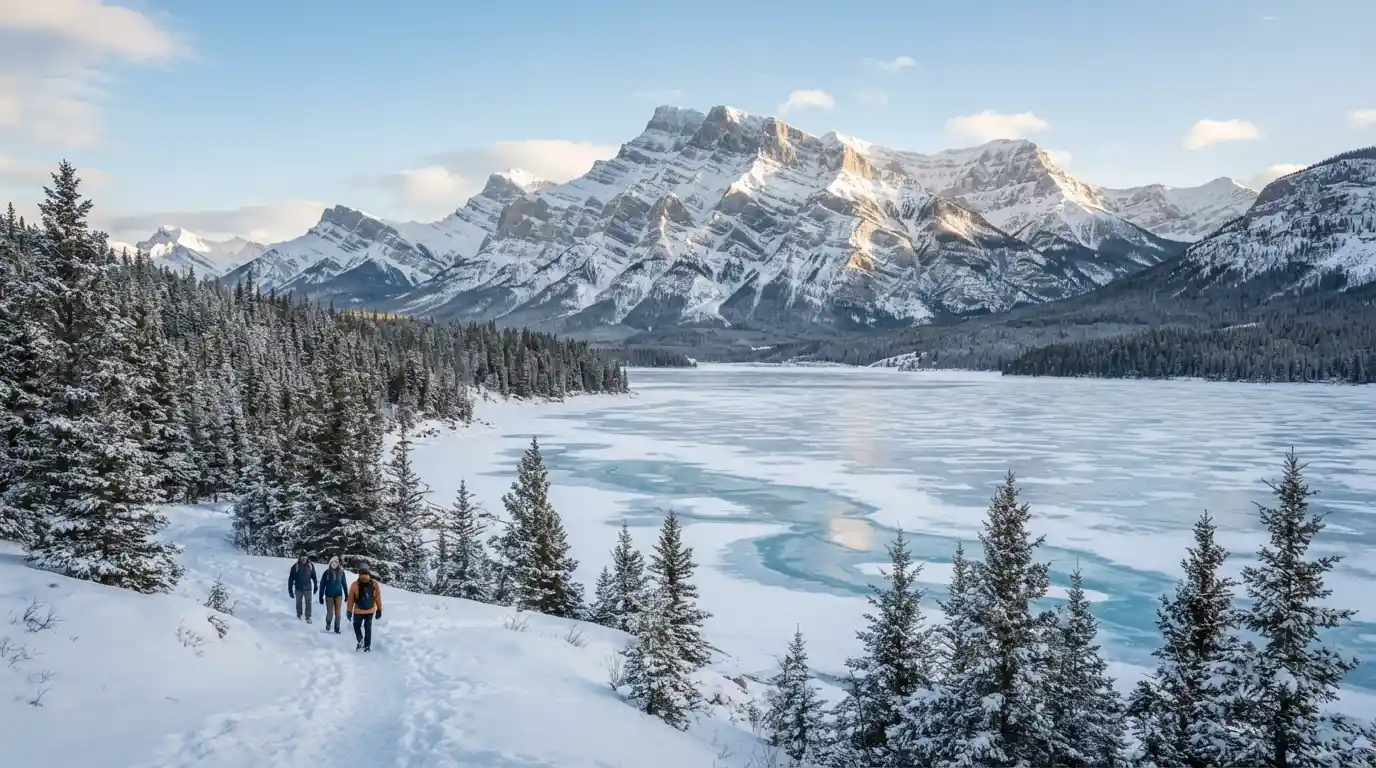
Lake Louise is one of the most picturesque places to visit in Alberta during winter. The turquoise summer lake becomes a frozen mountain setting surrounded by snow-covered peaks and forests.
Ice skating is one of the classic winter activities here, while nearby slopes provide opportunities for skiing and snowboarding. Visitors can also enjoy snowshoeing and scenic walks before returning to a warm restaurant or mountain lodge.
If you are building a cold-weather travel itinerary, Lake Louise is especially appealing because it combines dramatic scenery with accessible winter activities.
3. Jasper
Jasper offers a quieter alternative to some of Alberta’s busier mountain destinations. Located in Jasper National Park, the town provides access to snowy landscapes, mountain viewpoints, wildlife experiences, skiing, snowshoeing, and winter photography.
Winter is also an excellent season for travelers interested in dark skies and stargazing. The combination of mountains, forests, limited light pollution, and long winter nights creates memorable conditions for nighttime photography and sky watching.
Jasper can also be connected with other attractions through a longer road trip. Travelers interested in broader Canadian mountain destinations may also enjoy exploring places to visit in North Vancouver.
4. Canmore
Canmore sits just outside Banff National Park and offers an appealing combination of mountain scenery, outdoor recreation, restaurants, and a relaxed town atmosphere.
In winter, surrounding trails and mountain landscapes become ideal for snowshoeing, cross-country skiing, photography, and scenic walks. Canmore is also a useful base for travelers who want to explore the Canadian Rockies while staying close to several major attractions.
The town is particularly attractive for visitors who prefer a balance between outdoor adventures and comfortable urban conveniences.
5. Abraham Lake
Abraham Lake is one of Alberta’s most unusual winter attractions. The frozen lake is famous for naturally occurring ice bubbles that become trapped beneath the surface during the cold season.
The phenomenon creates fascinating patterns beneath clear sections of ice and has made the lake a favorite destination for winter photographers. The surrounding Rocky Mountain scenery adds another layer of visual appeal.
Visitors should treat frozen lakes as serious winter environments. Ice conditions can change, so travelers should follow local safety guidance and avoid assuming that apparently solid ice is automatically safe.
6. Kananaskis Country
Kananaskis Country is a strong choice for travelers looking for expansive mountain scenery away from the busiest tourist centers. Its valleys, forests, peaks, and winter trails provide plenty of opportunities for outdoor recreation.
Winter activities can include snowshoeing, cross-country skiing, wildlife viewing, scenic drives, and guided adventures. The area is also known for experiences such as dog sledding and sleigh rides.
If you enjoy outdoor destinations in colder climates, you can also compare the Rocky Mountain experience with cold places to visit around the world.
7. Edmonton
Not every Alberta winter trip needs to focus entirely on mountains. Edmonton provides a different kind of winter experience, combining city attractions with seasonal outdoor activities.
Visitors can explore museums, restaurants, shopping areas, entertainment venues, winter festivals, and cultural attractions. West Edmonton Mall is particularly useful for families and travelers looking for indoor activities when temperatures become uncomfortable.
Edmonton can also serve as a convenient starting point for a journey toward Jasper and other northern Alberta destinations.
8. Elk Island National Park
Elk Island National Park is an excellent option for travelers who want wildlife and winter scenery without heading deep into the Rockies. The park is known for its bison population and offers opportunities to experience snow-covered prairie and woodland landscapes.
Winter visitors can explore the park through activities such as snowshoeing, cross-country skiing, wildlife watching, and scenic drives. It can easily be incorporated into an Edmonton-based winter itinerary.
9. Drumheller
Drumheller provides a completely different landscape from the Rocky Mountains. Located in Alberta’s Canadian Badlands, it is known for dramatic geological formations and dinosaur-related attractions.
Winter can bring a quieter atmosphere to the region, making it appealing for travelers who prefer less crowded sightseeing. The contrast between snow and the area’s rugged badlands can also produce distinctive photographs.
10. Waterton Lakes National Park
Waterton Lakes National Park is another destination worth considering for a winter trip, particularly for travelers who enjoy peaceful landscapes and dramatic mountain scenery.
Winter conditions can be more challenging than during the warmer months, but the quieter environment provides a different way to experience the park. Snow-covered peaks, frozen landscapes, and open views can make the area attractive for photography and nature-focused travel.
11. Calgary
Calgary is a practical gateway to many Alberta winter destinations. The city combines restaurants, cultural attractions, shopping, entertainment, and urban conveniences with relatively easy access to the Rocky Mountains.
Travelers can spend time exploring Calgary before heading toward Banff, Lake Louise, Canmore, or other mountain destinations. This makes the city useful for travelers planning a multi-stop winter road trip.
12. Nordegg
Nordegg is a smaller destination for travelers who want to experience Alberta’s mountain wilderness in a less urban setting. Its location near Abraham Lake makes it particularly useful for exploring winter scenery in the region.
The surrounding landscape provides opportunities for photography, snowshoeing, sightseeing, and other cold-weather adventures. Travelers who prefer quiet mountain communities may find Nordegg more appealing than larger tourist centers.
13. Marmot Basin and the Jasper Area
For skiing and snowboarding, the Jasper area deserves special attention. Marmot Basin provides access to mountain terrain while remaining close to Jasper’s accommodations, restaurants, and other attractions.
This makes it possible to combine active days on the slopes with evenings exploring the town. Visitors can also extend their trip with wildlife viewing, snowshoeing, winter photography, and stargazing.
14. Banff and Lake Louise Winter Corridor
Instead of choosing only one destination, travelers can create a winter itinerary connecting Banff, Canmore, and Lake Louise. This approach allows visitors to experience several different mountain environments during the same trip.
A multi-day itinerary can include skiing, skating, snowshoeing, sightseeing, scenic drives, and relaxed evenings in mountain communities. Travelers interested in other seasonal destination guides can also explore New Hampshire’s seasonal destinations and winter places in South Carolina for comparison.
15. The Icefields Parkway
The Icefields Parkway is one of the most memorable ways to experience Alberta’s mountain scenery. The route connects the Banff and Jasper areas and passes through an extraordinary landscape of mountains, valleys, glaciers, and lakes.
Winter travel along mountain highways requires additional preparation. Check road conditions, weather forecasts, vehicle requirements, and closures before setting out, and allow additional travel time when snow or ice is present.
Best Winter Activities to Try in Alberta
One reason Alberta stands out as a winter destination is the variety of experiences available. Depending on your destination and conditions, you can build a trip around:
- Skiing and snowboarding
- Ice skating
- Snowshoeing
- Cross-country skiing
- Dog sledding
- Horse-drawn sleigh rides
- Wildlife viewing
- Winter photography
- Scenic mountain drives
- Stargazing and northern-lights viewing
- Winter festivals
- Cozy mountain-town experiences
If you enjoy planning trips around seasonal conditions, destinations such as Arizona in winter, Salt Lake City in winter, and Tokyo in winter provide useful comparisons for different types of cold-weather travel.
When Is the Best Time to Visit Alberta in Winter?
The ideal timing depends on your preferred activities. Early winter can bring fresh snow and a festive atmosphere, while the middle of winter generally provides classic snowy scenery and strong conditions for many winter activities. Later winter can offer longer daylight hours while still providing plenty of opportunities for snow-based adventures.
Because conditions vary considerably across Alberta, travelers should check destination-specific weather, road conditions, operating schedules, and trail information before departure.
Tips for Planning an Alberta Winter Trip
Winter travel in Alberta rewards preparation. Pack insulated layers, waterproof footwear, gloves, warm headwear, and equipment appropriate for the activities you plan to undertake. If you are driving, make sure your vehicle is properly prepared for snow and icy conditions.
It is also useful to avoid building an itinerary that is too tightly scheduled. Mountain weather can change quickly, and winter driving may take longer than expected. Leave room for weather-related adjustments and confirm attraction and accommodation availability before traveling.
Travelers who enjoy comparing destinations can also explore California’s fall destinations, Ireland in autumn, and places near Oslo when planning future seasonal trips.
Final Thoughts
The best places to visit in Alberta in winter range from world-famous mountain towns to quiet wilderness destinations. Banff and Lake Louise are excellent for iconic Rocky Mountain scenery, Jasper is ideal for a more expansive wilderness experience, and destinations such as Abraham Lake and Kananaskis provide memorable outdoor adventures.
Whether your priority is skiing, frozen lakes, wildlife, photography, winter road trips, or simply enjoying the atmosphere of a snowy mountain town, Alberta offers enough variety to build a winter itinerary around your interests.