There’s nothing quite like falling asleep under a blanket of stars and waking up to birdsong outside your tent. Camping is one of the most rewarding ways to experience the great outdoors, and it’s far more affordable than hotels or resorts. If you’ve never camped before, this beginner’s guide covers everything you need: choosing gear, picking a campsite, setting up, cooking outdoors, and staying safe.
WHY CAMPING IS THE PERFECT ADVENTURE
Camping strips travel down to its essentials and reconnects you with nature. It’s budget-friendly, flexible, and available everywhere from national parks to your own backyard. Studies consistently show that time outdoors reduces stress and improves sleep, and camping delivers both in abundance.
ESSENTIAL CAMPING GEAR FOR BEGINNERS
You don’t need top-of-the-line equipment to start. Focus on the “big three” first, then add comfort items as you go.
1. Tent
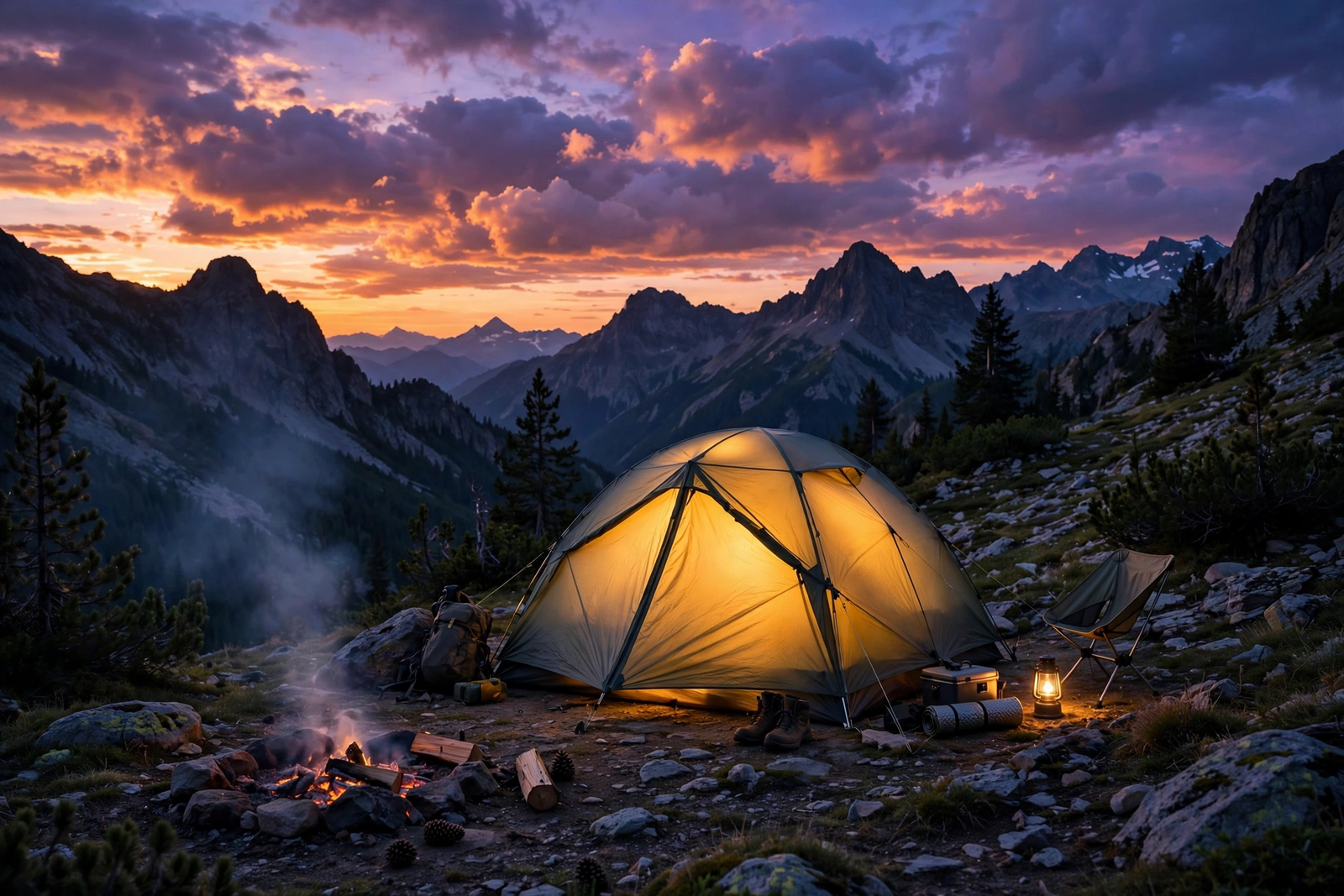
Choose a tent rated for one more person than will sleep in it (a “3-person” tent comfortably fits two). Look for a full rainfly, vestibules for gear storage, and color-coded poles for easy setup. Practice pitching it at home before your trip.
2. Sleeping Bag and Pad
Pick a sleeping bag rated 10 to 15 degrees lower than the coldest temperature you expect. A sleeping pad is just as important as the bag; it insulates you from the cold ground. Inflatable pads offer the best comfort-to-weight ratio.
3. Camp Stove and Cookware
A simple two-burner propane stove handles most camp meals. Add a pot, a pan, utensils, a cooler, and biodegradable soap. Don’t forget a lighter and backup matches.
4. Lighting
A headlamp keeps your hands free for camp chores, while a lantern lights up the picnic table. Bring extra batteries.
5. Camp Chairs and Table
Folding chairs transform a campsite from tolerable to genuinely comfortable. Many developed campgrounds provide picnic tables, but always have a backup plan.
CHOOSING YOUR FIRST CAMPSITE
For your first trip, pick a developed campground with restrooms, drinking water, and drive-up sites. State parks and national park campgrounds are ideal: they’re affordable, well-maintained, and often reservable online. Read recent reviews for notes on noise, shade, and site spacing. Arrive before dark so you can set up in daylight. Fall camping in New Hampshire and summer camping in West Virginia are particularly spectacular.
HOW TO SET UP CAMP LIKE A PRO
- Pick level ground: Clear away rocks and sticks, and orient your tent door away from prevailing wind.
- Use a footprint: A groundsheet under your tent extends its life and adds moisture protection.
- Stake it down: Even on calm evenings, stake out all corners; mountain weather changes fast.
- Organize zones: Keep sleeping, cooking, and food-storage areas separate. Never cook inside your tent.
- Store food safely: In bear country, use provided bear boxes or hang food properly. Elsewhere, keep food sealed in your vehicle at night.
CAMPFIRE COOKING BASICS
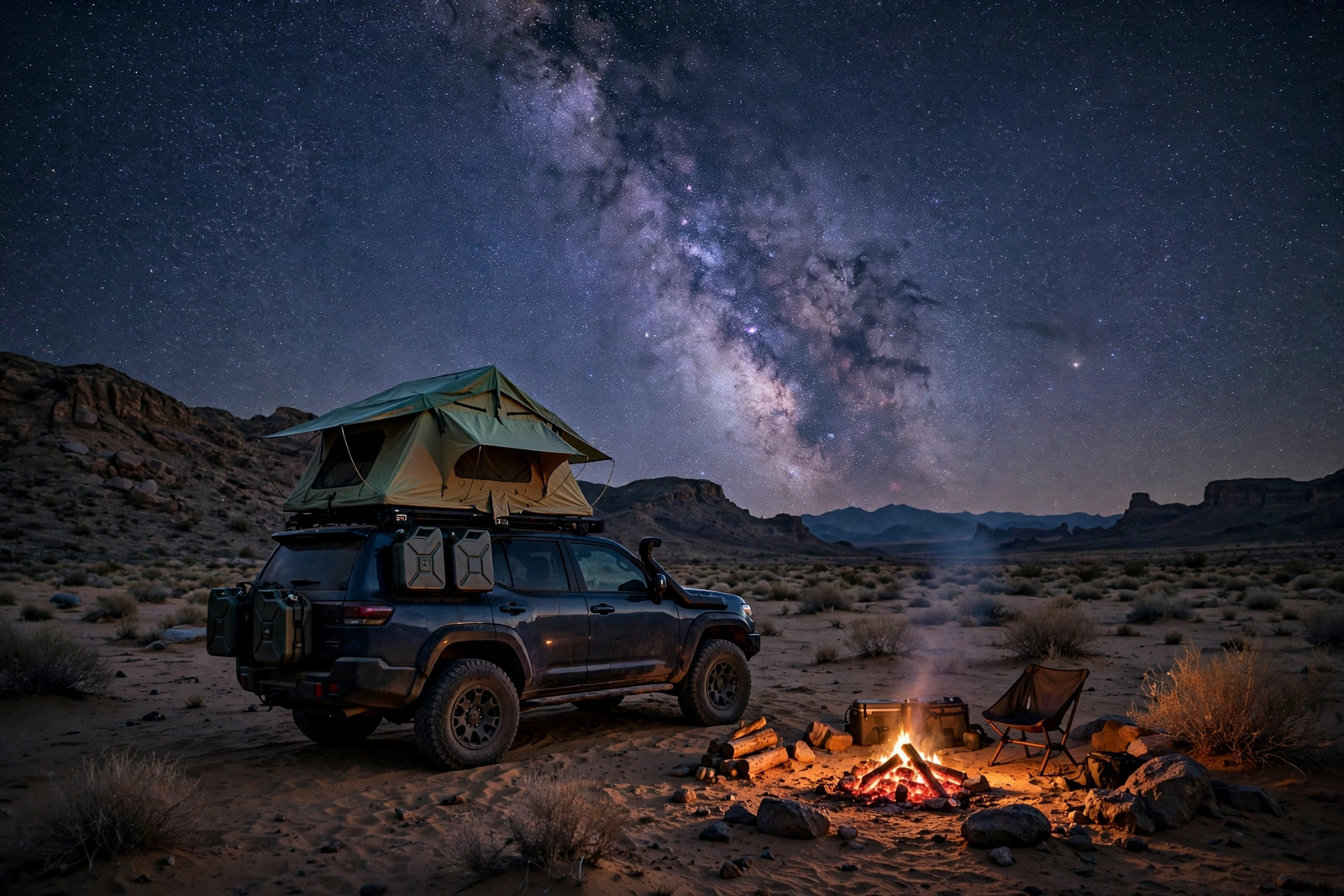
Check fire restrictions before your trip; many Western campgrounds ban wood fires in summer. Desert camping in Arizona often has strict fire rules, so check ahead. Where allowed, use established fire rings, keep fires small, and fully extinguish them with water until the ashes are cold to the touch. Easy beginner meals include foil-packet dinners, one-pot pasta, pancakes, and classic s’mores. Prep ingredients at home to simplify camp cooking.
CAMPING SAFETY TIPS
- Tell someone your campground and expected return date.
- Carry a first-aid kit and know basic wilderness first aid.
- Store scented items away from your tent in bear country.
- Keep a clean camp to avoid attracting wildlife.
- Bring more water than you think you need, plus a backup purification method.
- Check the weather forecast and have a rain plan.
LEAVE NO TRACE: CAMP RESPONSIBLY
Follow the seven Leave No Trace principles: plan ahead, camp on durable surfaces, dispose of waste properly, leave what you find, minimize campfire impact, respect wildlife, and be considerate of others. Pack out everything you pack in, including food scraps and micro-trash.
BEST US DESTINATIONS FOR FIRST-TIME CAMPERS
Great beginner-friendly campgrounds include Yosemite’s Upper Pines, the Watchman Campground in Zion, Assateague Island’s beachside sites with wild horses, and the drive-up loops of Great Smoky Mountains National Park. For Utah camping, see our guide on where to stay when visiting Capitol Reef National Park. All offer stunning scenery with the comfort of developed facilities.
FREQUENTLY ASKED QUESTIONS
What gear do I absolutely need for my first camping trip?
At minimum: a tent, sleeping bag, sleeping pad, headlamp, cooler with food and water, camp stove or grill, first-aid kit, and weather-appropriate clothing. Borrow or rent the big items before investing.
How much does it cost to start camping?
A basic beginner setup costs $200 to $400 if you buy budget-friendly gear, and campsite fees typically run $15 to $45 per night. Borrowing gear can bring your first trip under $100.
Is camping safe for beginners?
Yes, especially at developed campgrounds. Choose well-reviewed sites, follow food-storage rules, check weather, and tell someone your plans. Most camping mishaps come from poor preparation, not the wilderness itself.
Can I camp in national parks without a reservation?
Some parks hold first-come, first-served sites, but the most popular campgrounds book out months in advance on Recreation.gov. Always check reservation requirements before you go.
FINAL THOUGHTS
Your first camping trip doesn’t need to be perfect; it just needs to happen. Start simple, stay close to home, and focus on the fundamentals. Once you’ve spent a night under the stars, you’ll understand why millions of Americans call camping their favorite way to travel. See you out there.