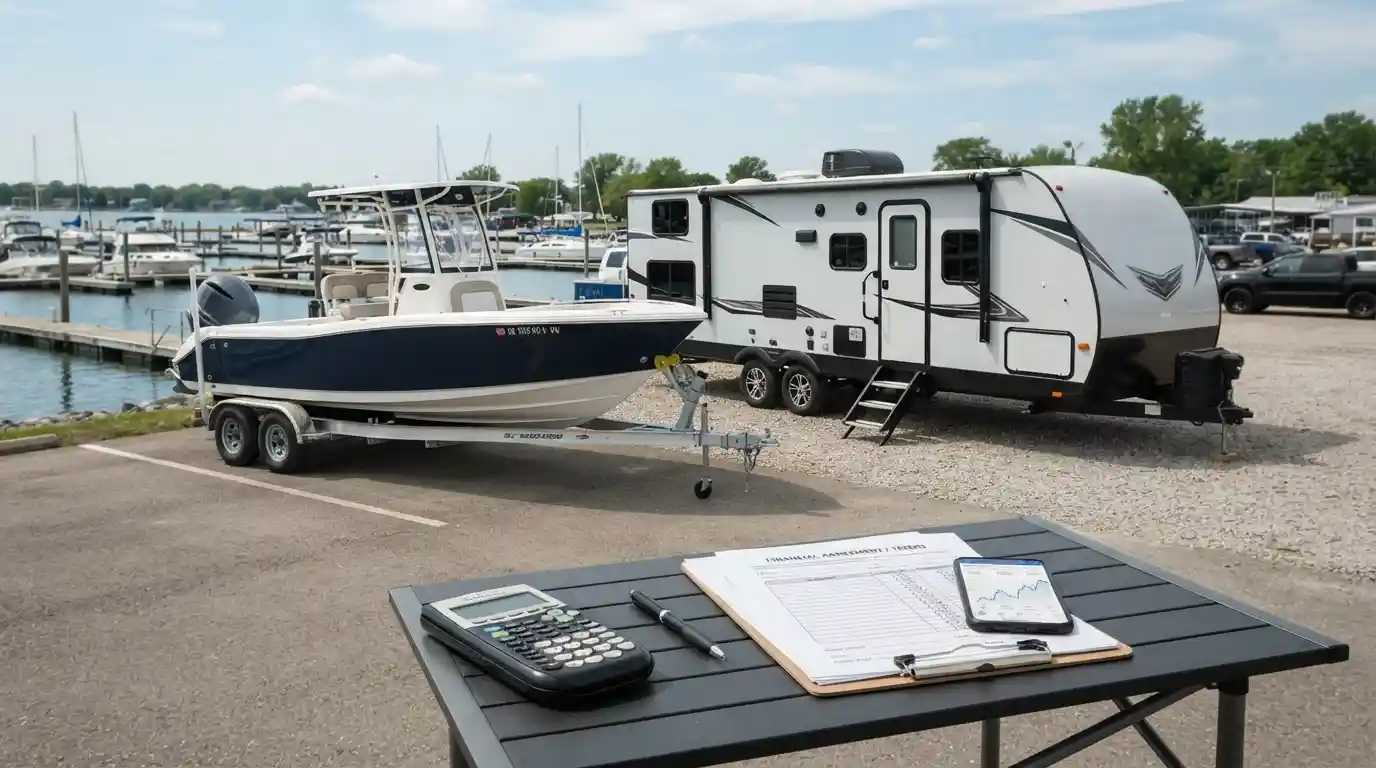
Vantage Recreational Finance is a specialized financing company serving the marine and RV markets in the United States. Its current financing information includes boats, RVs, outboard engines, trailers, and fish houses, with programs covering both new and used recreational units. For prospective borrowers, understanding what the company finances and how to evaluate its financing options is more useful than relying on a simple star rating.
This guide looks at Vantage Recreational Finance reviews from a practical consumer perspective and explains the factors borrowers should consider before submitting an application.
What Is Vantage Recreational Finance?
Vantage Recreational Finance focuses on financing for marine and recreational vehicle purchases. Unlike a general-purpose lender that may handle many types of consumer loans, its services are centered on recreational assets such as boats and RVs.
The company states that it works with lending sources in the marine industry and offers financing programs for qualifying borrowers. Its published financing categories include new and used boats, RVs, new outboard engines, new trailers, and fish houses.
This specialization can be useful for buyers because recreational purchases can involve details that are different from ordinary consumer purchases. A borrower may need to consider the age of the unit, equipment, registration requirements, insurance, seasonal use, and the relationship between the dealer, lender, and buyer.
What Do Vantage Recreational Finance Reviews Tell You?
Online reviews can provide useful clues about customer experiences, but they should not be treated as the only measure of a financing company. Individual experiences can vary depending on credit profile, purchase type, dealer, loan structure, documentation, and the specific lender involved in a transaction.
Recent customer feedback associated with Vantage includes positive comments about responsiveness, communication, and the speed of some financing transactions. At the same time, publicly available review platforms also contain critical feedback. That makes it important to evaluate the details behind reviews rather than looking only at an overall rating.
When reading Vantage Recreational Finance reviews, pay attention to recurring themes such as:
- How clearly loan terms are explained
- How quickly questions are answered
- Whether borrowers understand the required documentation
- How long approval and funding take
- Whether the final terms match the borrower’s expectations
- How changes or complications are handled during the transaction
- Whether the borrower understands which lender ultimately provides the financing
What Types of Purchases Can Vantage Finance?
One of the most important considerations is whether a lender finances the specific asset you want to purchase. Vantage’s published financing information identifies several recreational categories.
Boat Financing
Boat financing is a major part of the company’s offering. Programs can cover qualifying new and used boats, giving buyers an opportunity to structure a purchase around their budget and credit circumstances.
Boat buyers should look beyond the purchase price. Registration, storage, maintenance, fuel, repairs, marina expenses, and insurance can substantially increase the total cost of ownership.
RV Financing
RV financing is another important category. Recreational vehicles can vary significantly in price, age, size, and equipment, so borrowers should compare the financing structure against the expected period of ownership.
A lower monthly payment may result from a longer repayment period. While that can improve monthly cash flow, it can also increase the amount of interest paid over the life of the loan.
Outboard Engine Financing
For marine customers who need a new outboard engine, specialized financing may provide an alternative to paying the entire cost upfront. Buyers should compare the financing cost with available cash discounts and other payment options before deciding.
Trailer and Fish House Financing
Vantage also identifies new trailers and fish houses among the products it finances. These purchases can have very different price points and ownership costs, so the same evaluation process should be applied: calculate the total cost, understand the loan terms, and account for related expenses.
How Long Can the Financing Term Be?
Vantage’s published information states that some financing programs offer terms of up to 240 months. A long repayment term can make a large purchase easier to fit into a monthly budget, but borrowers should not automatically choose the longest available term.
For example, extending a loan can reduce the monthly payment while increasing the total interest paid. It can also affect how quickly the borrower builds equity in the recreational asset.
Before accepting a long-term loan, compare at least three figures:
- Monthly payment
- Total amount paid over the loan term
- Total interest and financing costs
Looking at all three figures gives you a much clearer picture than focusing on the monthly payment alone.
Credit Requirements and Financing Options
Vantage states that it has programs designed to assist individuals across different credit profiles. However, that does not mean every applicant will receive the same rate, loan amount, term, or approval decision.
Your credit history, income, debt obligations, down payment, asset being financed, loan amount, and other underwriting factors can influence the terms available to you.
If you are comparing financing options, review your credit position before applying. Knowing your approximate credit standing and existing monthly obligations can help you understand whether a proposed payment fits comfortably within your budget.
Borrowers should also distinguish between a prequalification, a preapproval, and a final loan approval. These terms can have different meanings depending on the lender and stage of the financing process.
What Should You Compare Before Accepting a Recreational Loan?
Comparing lenders is an important part of responsible borrowing. Even when a financing offer appears attractive, you should examine the complete structure of the loan.
Interest Rate
The interest rate directly affects the cost of borrowing. Compare the rate offered to you with other financing options available for the same type of asset and borrower profile.
Loan Term
Two loans with similar monthly payments can have very different total costs if their repayment periods are different. Always compare the total repayment amount.
Down Payment
A larger down payment may reduce the amount you need to borrow. However, keeping sufficient emergency savings is also important, so avoid using every available dollar simply to reduce the loan balance.
Fees and Closing Costs
Ask for a complete breakdown of financing-related fees before signing. Confirm whether there are application, documentation, origination, processing, or other transaction costs associated with your particular financing arrangement.
Early Payoff Terms
If you expect to pay the loan off early, ask whether there are any restrictions, penalties, or conditions related to early repayment.
Why Insurance Matters With Recreational Financing
Insurance is an important part of the overall ownership cost for many recreational assets. A financed boat or RV may have insurance requirements specified by the lender, and coverage costs should be included in your budget before you finalize the purchase.
Insurance should not be treated as an afterthought. Premiums can vary based on the asset, location, usage, value, coverage limits, deductible, and other factors.
ThinkRove also covers topics such as home insurance services, insurance compliance, insurance coverage, and insurance agency services. While these subjects are different from recreational-asset insurance, they illustrate why coverage should be considered as part of a broader financial plan.
Vantage Recreational Finance vs. Other Financing Choices
There is no single financing structure that works for every buyer. Depending on the purchase, you may be comparing a specialized recreational lender with a bank, credit union, dealer-arranged financing, or another financial provider.
A specialized lender may have more familiarity with recreational assets, while a bank or credit union may offer different terms based on your broader banking relationship. Dealer financing can also be convenient because financing and purchasing may be coordinated through the same transaction.
The right comparison is therefore not simply “which company has the best reviews?” Instead, compare the actual offer you receive with competing offers for the same purchase.
Questions to Ask Before Signing
Before accepting a recreational financing offer, prepare a short list of questions. Getting clear answers before signing can prevent misunderstandings later.
- What is the exact interest rate?
- What is the annual percentage rate, if applicable?
- How long is the repayment period?
- What is the total amount financed?
- What is the estimated total amount paid?
- Are there any financing or documentation fees?
- Is there an early payoff restriction or penalty?
- What insurance coverage is required?
- What documentation is needed before funding?
- Which lender will ultimately hold the loan?
- What happens if the purchase price or vehicle details change?
- When will the seller or dealer receive funding?
How to Read Vantage Recreational Finance Reviews Responsibly
Reviews are most useful when you analyze them for patterns rather than relying on isolated comments. A single positive review does not guarantee that every borrower will have the same experience, just as a single negative review does not necessarily describe every transaction.
Look for reviews that explain the actual circumstances of the financing. Detailed comments about communication, paperwork, approval, funding, payment terms, or problem resolution can provide more useful information than short comments that only provide a rating.
You should also consider the date of each review. Financing processes, staff, technology, policies, and lending programs can change over time. More recent feedback may provide a better picture of the current customer experience, although it should still be considered alongside the terms of the actual offer you receive.
Related Financial Topics Worth Understanding
Recreational financing is only one part of personal financial planning. Buyers considering a large financed purchase can also benefit from understanding broader financial concepts.
For example, understanding the role of a finance coordinator can help explain how financial processes are organized. Buyers interested in equipment financing may also find equipment financing concepts useful for comparison.
Other ThinkRove resources explore luxury-item financing, consumer finance services, and long-term financial planning. These topics are not substitutes for recreational-loan research, but they can provide useful context when thinking about debt and financial priorities.
Business owners can also explore financial-services risk concepts and business financial strategy when evaluating broader financial decisions.
Is Vantage Recreational Finance Worth Considering?
Vantage Recreational Finance is a specialized option for consumers seeking financing for boats, RVs, and certain other recreational products. Its published programs include new and used recreational units, extended loan terms, and financing for several marine and recreational categories.
Public reviews show a mixture of customer experiences, including positive feedback about communication and transaction speed as well as critical feedback about individual experiences. That makes it especially important to review the actual terms of your proposed financing rather than making a decision based solely on online ratings.
Before moving forward, compare the interest rate, repayment period, total financing cost, required insurance, fees, and early-payoff conditions. If possible, obtain competing offers for the same purchase so you can make a direct comparison.
Final Thoughts
Vantage Recreational Finance reviews can help prospective borrowers understand the kinds of experiences other customers have reported, but reviews are only one part of a responsible financing decision.
The most important step is to understand your own financing offer. Look beyond the monthly payment and examine the complete cost of borrowing. Consider the purchase price, down payment, interest rate, loan term, fees, insurance, maintenance, and other ownership expenses.
Whether you are financing a boat, RV, outboard engine, trailer, or another recreational purchase, taking time to compare options can help you choose financing that fits your financial circumstances rather than simply choosing the first available offer.