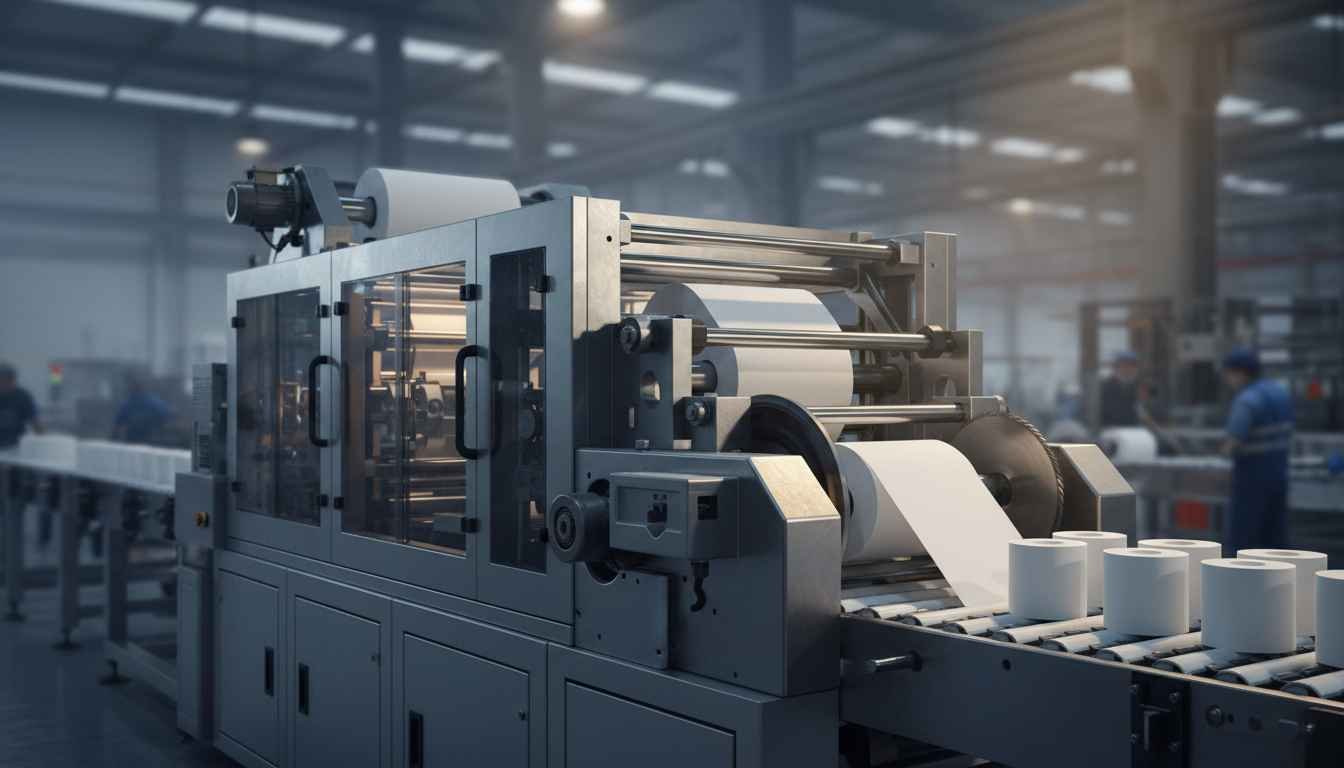
The elephant in the room is often overlooked when discussing modern manufacturing – how something as simple as a toilet roll can be produced efficiently at scale. While it might seem trivial, the technology behind toilet roll manufacturing machines has transformed a basic commodity into a high-speed, automated industry. These machines combine precision engineering, material handling, and advanced automation to deliver millions of rolls worldwide, making them indispensable to paper product manufacturers.
Understanding the full scope of toilet roll manufacturing machines requires a careful analysis of their strengths, weaknesses, opportunities, and threats. These machines, often powered by integrated PLC systems and high-quality rollers, can streamline production while maintaining consistent quality. For manufacturers, investing in such technology is not merely about output – it’s about reliability and sustainability. Leading suppliers, like MaxTool, have been instrumental in providing robust machines that balance speed, accuracy, and cost-effectiveness.
Strengths
One of the main strengths of toilet roll manufacturing machines is their speed. Modern machines can produce hundreds of rolls per minute, significantly reducing labor costs and minimizing human error. Automated systems handle tasks such as unwinding, embossing, perforating, and rewinding with high precision, ensuring uniformity across all products.
Durability is another key advantage. Machines built with stainless steel and high-grade components can operate continuously for years with minimal maintenance. For example, a mid-sized paper manufacturer in Germany upgraded to a fully automated toilet roll line and reported a 35% increase in output without additional staff.
Furthermore, these machines are versatile. Many can switch between different roll sizes and ply configurations with minimal downtime, allowing manufacturers to respond to changing consumer demands efficiently. This flexibility is critical in a market where brand differentiation and packaging innovation drive sales.
Weaknesses
No system is perfect. Toilet roll manufacturing machines require a significant upfront investment, often reaching hundreds of thousands of dollars. Small-scale manufacturers may find this cost prohibitive, especially when factoring in installation, operator training, and maintenance expenses.
Another weakness lies in complexity. These machines use intricate mechanical and electronic systems that require skilled technicians for maintenance. Downtime due to technical issues can result in substantial production losses, and sourcing replacement parts may be time-consuming.
Energy consumption is also a concern. High-speed machines demand continuous electricity and can strain facilities with inadequate power infrastructure. Manufacturers need to weigh the efficiency gains against operational costs to ensure profitability.
Opportunities
Growing global demand for hygiene products presents a tremendous opportunity for toilet roll manufacturers. Emerging markets in Asia, Africa, and Latin America are experiencing rising standards of living, which correlates with increased toilet paper consumption. Investing in efficient manufacturing machines positions companies to capitalize on this expanding market.
Technological innovation offers another opportunity. Integration with IoT and AI systems can allow real-time monitoring of production lines, predictive maintenance, and quality assurance. Early adopters can gain a competitive edge by reducing waste, optimizing resource use, and improving overall product consistency.
Eco-friendly initiatives also open doors. Machines capable of producing recycled or bamboo-based toilet rolls appeal to environmentally conscious consumers. Manufacturers who adapt to sustainable production methods can enhance their brand reputation while tapping into a growing niche market.
Threats
Market volatility and raw material shortages pose significant threats. Fluctuations in pulp prices or disruptions in the supply chain can dramatically affect profitability. Similarly, global crises, such as pandemics, can trigger sudden spikes in demand that overwhelm production capacity.
Competition is intense. Both established brands and new entrants are investing in modern machinery to increase output and reduce costs. Staying ahead requires constant reinvestment in technology and ongoing process optimization.
Potential Drawbacks
While toilet roll manufacturing machines are powerful tools, they are not suitable for every business. Small artisanal producers may find the scale and cost unjustifiable. Additionally, reliance on automated systems can reduce workforce engagement, potentially impacting local employment.
Environmental regulations are becoming stricter. Facilities that fail to implement proper waste management and energy-efficient operations may face fines or public backlash. Thus, manufacturers must consider regulatory compliance as part of their investment decision.