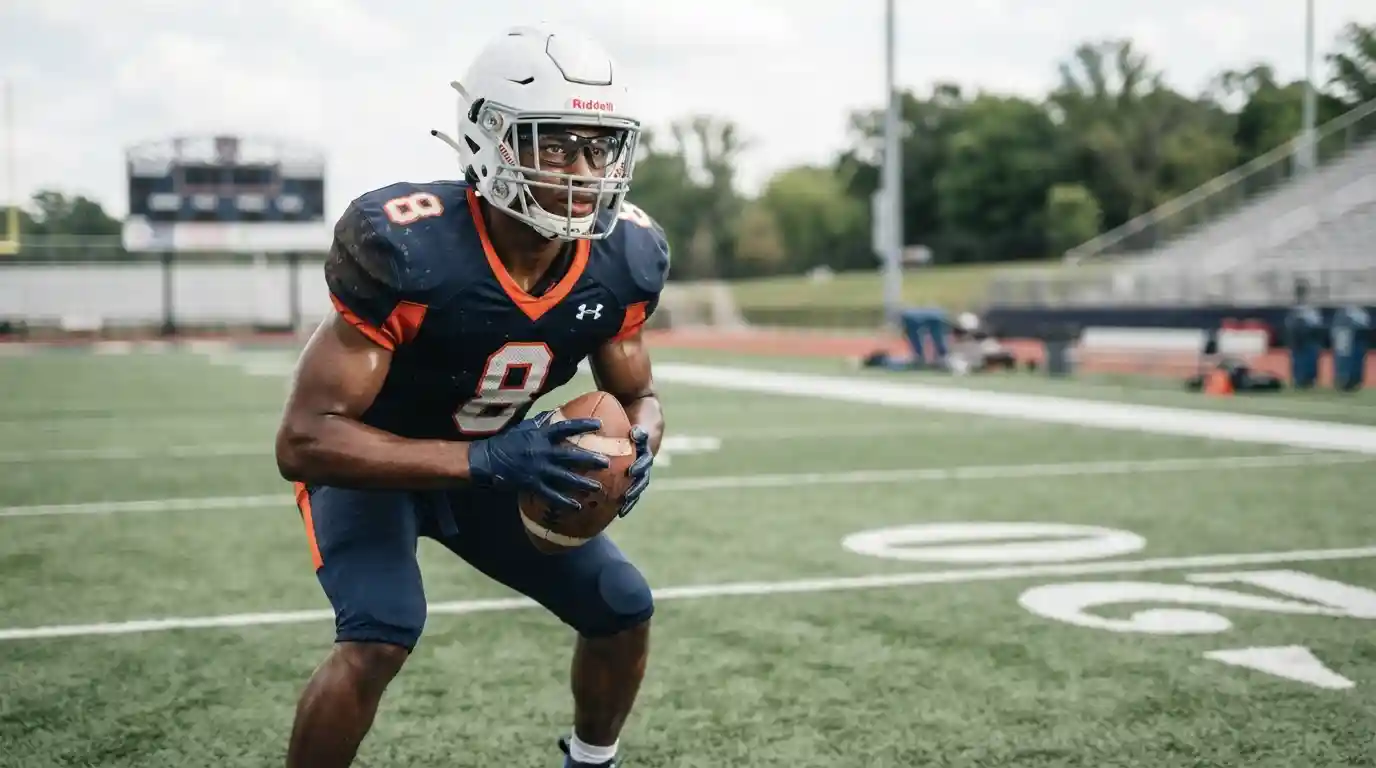
The right eyewear should do more than look sporty. It should provide a secure fit, maintain clear vision, resist impact, and remain comfortable during movement. Whether you are a youth athlete, recreational player, student athlete, or competitive football player, understanding the materials, fit, safety features, and maintenance requirements can help you make a more informed choice.
Why Eye Protection Matters in Football
Football involves rapid movement and frequent physical contact. Players can encounter accidental contact from hands, elbows, helmets, equipment, turf, or other objects during practices and games. Even a momentary loss of visual clarity can affect a player’s ability to react safely.
Protective eyewear can provide an additional barrier around the eyes while allowing the athlete to maintain a wide field of view. However, goggles should complement—not replace—the other protective equipment required for the specific form of football being played.
For athletes who regularly participate in multiple sports, protective eyewear can also become part of a broader approach to sports safety. This is particularly relevant for players who already use protective equipment for other activities covered in our guide to sports participation and athletic activities.
Sports Goggles vs. Regular Glasses
Regular prescription glasses are designed primarily for vision correction, not for sports impact protection. Their frames and lenses may not be engineered to handle the same conditions encountered during athletic activity.
Sports-specific eyewear is designed with athletic movement in mind. Depending on the model, it may include impact-resistant lenses, protective framing, cushioning, adjustable straps, and ventilation features.
Players who need vision correction should consider sports-specific prescription options rather than simply wearing everyday glasses during contact-heavy activities. An eye-care professional can help determine the appropriate solution for an athlete’s prescription and sport.
Polycarbonate Lenses for Sports Protection
One of the most important materials to look for in protective sports eyewear is polycarbonate. Polycarbonate is lightweight and highly impact resistant, making it a common choice for protective lenses.
For football players, lens durability matters because eyewear can be exposed to accidental impacts and repeated movement. A strong lens material can provide an additional layer of protection without creating unnecessary weight on the face.
Polycarbonate can also be useful for athletes who spend considerable time outdoors because suitable lens designs can provide UV protection. The exact protection offered depends on the product, so athletes should always check the manufacturer’s specifications before purchasing.
If you are interested in sports-related materials and performance apparel, you can also explore our guide to high-performance sports yarn and learn how material selection can influence athletic clothing.
Key Features to Look for in Football Goggles
Not every pair of sports goggles is designed for the same activity. When choosing eyewear, look beyond appearance and consider how the product performs during real movement.
Impact-Resistant Lenses
The lens should be designed for sports use and appropriate impact protection. Polycarbonate is commonly selected for protective sports eyewear because of its combination of low weight and impact resistance.
Secure Strap or Retention System
Football involves sprinting, sudden direction changes, jumping, and physical contact. A secure retention system helps keep eyewear in position instead of allowing it to slide during movement.
Cushioned Frame
Soft padding around the brow and nose area can improve comfort and help reduce pressure points. This becomes especially important when goggles are worn for extended practices or games.
Anti-Fog Performance
Sweat, humidity, temperature changes, and heavy breathing can cause lenses to fog. Anti-fog treatments and ventilation features can help maintain clearer vision, although no anti-fog system should be expected to eliminate fogging under every condition.
Wide Field of View
Peripheral awareness is essential in football. Players need to monitor movement around them rather than focusing exclusively on the ball. Goggles with a suitable frame and lens shape should provide clear vision without unnecessarily obstructing the athlete’s field of view.
Comfortable Nose and Temple Areas
Pressure around the nose, temples, or ears can become distracting during a game. Look for a design that remains secure without creating excessive pressure.
Choosing the Right Fit
Fit is one of the most important factors when choosing sports goggles. Even a technically advanced pair may be unsuitable if it moves excessively, pinches the face, or interferes with normal vision.
Start by checking whether the frame sits securely without pressing painfully against the nose or temples. The strap should provide enough tension to hold the goggles in place without becoming uncomfortable.
Move your head from side to side, look up and down, and simulate basic football movements while wearing the goggles. If they shift significantly, the fit may need adjustment or a different frame size.
Players with different face shapes may need different frame designs. Youth athletes also require special attention because their facial dimensions can change as they grow.
Football Goggles for Youth Players
Younger athletes can benefit from properly fitted protective equipment because youth football involves many of the same rapid movements and accidental-contact risks found in adult play.
Parents and coaches should pay close attention to fit, comfort, lens quality, and compatibility with the player’s other protective equipment. A pair that fits one child does not necessarily fit another child correctly.
It is also important to replace protective eyewear when it becomes damaged, excessively scratched, cracked, or otherwise compromised. Protective equipment should remain in usable condition throughout the season.
Families interested in broader youth-focused topics can also explore activities and ideas for children alongside other family-oriented resources.
American Football and Soccer Need Different Considerations
The word “football” can refer to different sports depending on the country. American football and soccer have different equipment requirements and different types of contact.
In American football, players commonly use helmets and faceguards, and additional eye or face protection may be incorporated into that equipment. A visor attached to a helmet is not the same thing as standalone sports goggles.
In soccer, players may use sports eye guards when appropriate, particularly when eye protection is recommended because of previous eye injuries or individual circumstances.
Before purchasing protective eyewear, athletes should confirm that the product is designed for their specific sport and compatible with their required equipment.
Certification and Safety Standards
Safety standards are an important consideration when buying protective sports eyewear. Rather than relying only on marketing language, buyers should look for clear information about the product’s testing, intended use, and applicable safety requirements.
A product marketed as “sports eyewear” is not automatically suitable for every sport. The relevant standard can depend on the activity and the type of protection being provided.
When purchasing protective eyewear for a child or competitive athlete, check the manufacturer’s documentation and product labeling. If you are uncertain about whether a particular product is appropriate, ask a qualified eye-care professional or sports-equipment specialist.
Prescription Sports Goggles
Players who require corrective lenses should not assume that ordinary prescription glasses are adequate for contact sports. Prescription sports goggles can combine vision correction with a sports-specific protective design.
Before ordering prescription sports eyewear, obtain an up-to-date prescription and discuss the intended activity with an eye-care professional. The right solution can depend on the player’s prescription, age, sport, and existing eye-health considerations.
Prescription needs can also be relevant when selecting other protective or performance-oriented eyewear, including sunglasses and protective eyewear.
How to Reduce Fogging During a Game
Fogging is one of the most common complaints associated with sports eyewear. When warm moisture meets a cooler lens surface, condensation can reduce visibility.
Ventilation can help air move around the lens area, while anti-fog coatings may reduce condensation. Players should also avoid touching lenses with sweaty hands because fingerprints and moisture can further reduce clarity.
Keep a suitable microfiber cloth available during training sessions and follow the manufacturer’s cleaning instructions. Avoid aggressive rubbing or household cleaners that may damage specialized lens coatings.
How to Clean and Maintain Sports Goggles
Proper maintenance can help keep protective eyewear usable throughout the season. Start by following the cleaning instructions supplied with the goggles.
- Rinse away loose dust or debris before wiping the lenses.
- Use a clean microfiber cloth designed for lenses.
- Avoid abrasive materials that can create scratches.
- Do not leave goggles exposed to excessive heat for long periods.
- Store them in a protective case when they are not being used.
- Inspect straps, padding, frames, and lenses regularly.
- Replace damaged eyewear rather than continuing to use compromised equipment.
Small scratches may seem harmless, but excessive lens damage can interfere with visibility. Athletes should treat protective eyewear as sports equipment rather than ordinary fashion accessories.
How Goggles Can Support Better Visual Performance
Protective eyewear is primarily intended to help protect the eyes, but comfortable, clear eyewear can also support a player’s ability to maintain visual awareness.
A stable frame can prevent repeated adjustments during play. Clear lenses can help the player maintain consistent visual information. Appropriate tinting can be useful in certain lighting conditions, provided that the tint does not make it harder to see the ball, teammates, or surrounding field.
The goal should not be to assume that goggles automatically make an athlete faster or more skilled. Instead, well-fitted eyewear can remove some distractions and help a player maintain focus on the activity.
Sports Goggles and Overall Athletic Gear
Eye protection is only one component of a complete football setup. Players should use the protective equipment required for their league, age group, position, and level of play.
Other sports-related equipment and apparel also contribute to comfort and performance. For example, our article about sports goggles for football is part of a broader collection of sports-focused content on ThinkRove.
Readers interested in sports apparel can also explore activewear materials, while those interested in sports and community activities can read about sports experiences and athletic activities.
Common Mistakes When Buying Football Goggles
Several mistakes can reduce the usefulness of protective eyewear. One common mistake is buying based only on appearance. A stylish frame is not necessarily appropriate for a contact sport.
Another mistake is choosing an incorrect size. If goggles slide down the face or create excessive pressure, they may become a distraction during play.
Players should also avoid assuming that every pair of protective eyewear is suitable for every sport. Check the intended use and relevant safety information before buying.
Finally, do not continue using eyewear with significant damage simply because it still looks usable. Protective equipment should be inspected regularly and replaced when its structural integrity or visibility is compromised.
When Should Football Goggles Be Replaced?
There is no single replacement schedule that applies to every pair of goggles. Replacement depends on how frequently the eyewear is used, how it is stored, and whether it has experienced impacts or visible deterioration.
Replace goggles if you notice cracked lenses, damaged frames, broken straps, severely worn padding, or visibility problems that cannot be corrected through proper cleaning.
If a significant impact occurs, inspect the equipment carefully and follow the manufacturer’s replacement recommendations. When in doubt, professional guidance is preferable to continuing to use questionable protective gear.
Final Thoughts on Sports Goggles for Football
Sports goggles for football can be a valuable part of an athlete’s protective equipment when the eyewear is specifically designed for the activity, fits securely, and meets appropriate safety requirements.
The most important factors are not flashy designs or marketing promises. Look for suitable impact protection, comfortable construction, stable retention, clear vision, appropriate ventilation, and product information that clearly explains the intended use.
For athletes who need prescription correction, a sports-specific prescription solution may provide a better option than ordinary glasses. Players should also make sure that their eyewear works correctly with helmets, faceguards, and other required equipment.
Ultimately, good protective equipment should allow athletes to concentrate on the game rather than constantly worrying about their gear. Choosing carefully, maintaining the goggles properly, and replacing damaged equipment can help make eye protection a practical part of a responsible football routine.