The Market Context
The retail trading landscape has undergone a significant transformation over the last decade, driven by the proliferation of digital platforms and algorithmic execution tools. Brokers are no longer simply intermediaries; they serve as critical infrastructure nodes enabling market access, liquidity aggregation, and execution reliability. This shift requires evaluating broker performance not merely on spreads or fees but on technological robustness and systemic resilience, particularly as trading volumes continue to diversify across asset classes.
Technological adoption is increasingly shaping competitive advantage in retail trading. Latency-sensitive strategies, including scalping and high-frequency arbitrage, depend on brokers that can provide seamless connectivity and real-time data feeds. Understanding this market context is essential for professionals and retail participants seeking to optimize trade execution amidst volatile and fragmented markets.
Regulatory Infrastructure
Regulatory compliance remains a cornerstone of broker performance, as licensing, fund segregation, and auditability directly impact operational credibility. Brokers operating under multiple jurisdictions often implement layered compliance frameworks that not only protect client assets but also ensure adherence to anti-money laundering and know-your-customer requirements. The presence of a robust regulatory infrastructure is increasingly correlated with lower counterparty risk and higher client confidence.
Fund segregation, in particular, is a differentiator in performance assessment. Brokers that maintain client accounts separately from operational capital minimize systemic exposure in the event of insolvency, enhancing overall market stability. Evaluating licensing structures and compliance certifications provides a quantifiable measure of institutional-grade operational discipline, which directly affects execution trustworthiness and continuity of service.
The Latency Equation
Execution speed has emerged as a critical metric for both retail and professional traders, particularly in fast-moving markets. Latency, measured from order placement to confirmation, directly influences slippage and fill rates, impacting profitability in short-term strategies. Brokers leverage a combination of co-located servers, optimized routing algorithms, and direct market access to reduce round-trip delays and improve execution predictability.
Additionally, network architecture and aggregation layers affect trade efficiency. A broker that can minimize processing overhead while maintaining consistent connectivity to liquidity providers provides a measurable performance advantage. This latency equation is now a primary criterion when evaluating brokerage infrastructure, as even millisecond improvements can translate into substantial execution gains over large trading volumes.
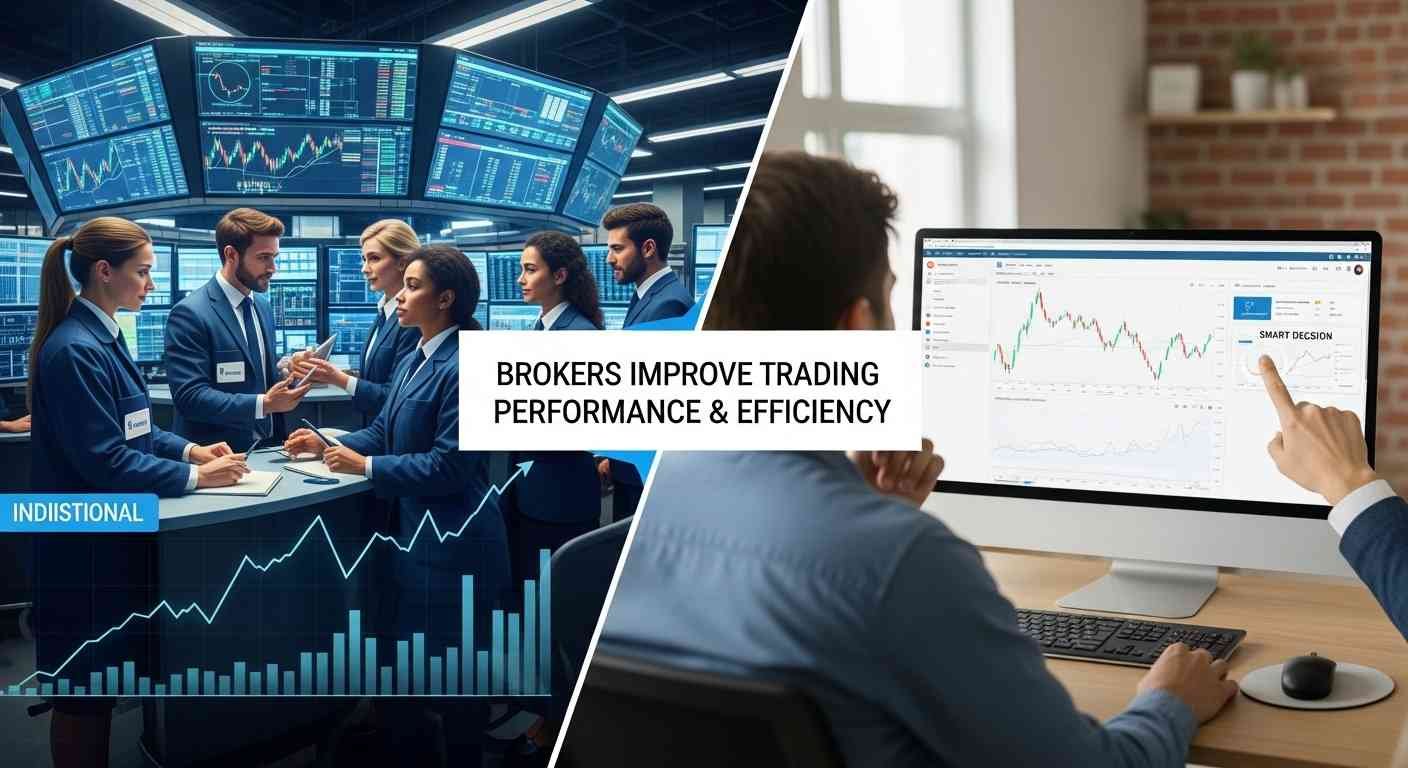
“Institutional-grade execution is no longer exclusive to Wall Street; platforms like reliable trading platform are bridging the gap for retail traders through low-latency aggregation.”
User Experience UX Protocols
User experience extends beyond aesthetics and into operational performance, particularly in charting, order entry, and cross-device synchronization. High-performing brokers invest in mobile-responsive interfaces, customizable dashboards, and integrated technical analysis tools that enable traders to act decisively under time-sensitive conditions. An intuitive interface coupled with robust backend support minimizes execution errors and operational friction.
Charting protocols are especially relevant for technical traders, as latency in visual updates can affect decision-making accuracy. Brokers increasingly employ GPU-accelerated rendering and cloud-based analytics to maintain high-fidelity visualizations across devices. The integration of these UX protocols is central to bridging the gap between retail accessibility and institutional-level execution capabilities.
Risk Management Features
Risk management capabilities are fundamental to broker evaluation, as they directly protect client capital while preserving systemic integrity. Features such as negative balance protection, guaranteed stop-losses, and real-time margin monitoring mitigate exposure to extreme volatility. Brokers with advanced risk management frameworks can reduce the likelihood of forced liquidations, thereby maintaining trust and operational reliability.
Automated safeguards and pre-trade risk checks also support scalable operations. By embedding algorithmic controls into trading workflows, brokers can dynamically adjust leverage limits, validate orders, and enforce liquidity buffers. These measures enhance both the efficiency and credibility of trading platforms, positioning them as resilient nodes within broader market infrastructure.
Latency vs Execution Cost Analysis
When assessing broker performance, analyzing the trade-off between latency and execution cost provides actionable insights for strategic decision-making. Lower latency often comes at a premium, but its impact on slippage and fill consistency can justify incremental expenses. Conversely, cost-effective execution solutions may introduce latency that undermines high-frequency or scalping strategies, requiring careful evaluation of routing paths and liquidity provider selection.
Visualizing this trade-off through latency versus execution cost charts enables firms and sophisticated traders to identify optimal execution corridors. By correlating historical slippage with latency data, participants can make informed decisions regarding broker selection and strategy alignment. This analytical approach underscores the importance of metrics-driven performance assessment beyond surface-level pricing considerations.
Future Outlook
Looking ahead, AI and automation will play a central role in shaping brokerage performance by 2026. Predictive analytics, machine learning-driven order routing, and adaptive risk monitoring are expected to become standard components of trading infrastructure. Brokers that integrate these technologies will enhance execution precision, improve liquidity utilization, and support sophisticated retail and institutional strategies simultaneously.
Automation will also extend to user-facing functionalities, enabling dynamic dashboard personalization, predictive alerts, and real-time scenario modeling. As the technology landscape evolves, brokers that strategically invest in AI-powered infrastructure and scalable execution protocols will define the next generation of reliable and high-performance trading environments.